


Admin
3 min Read
16th July 2025
Month: July 2025
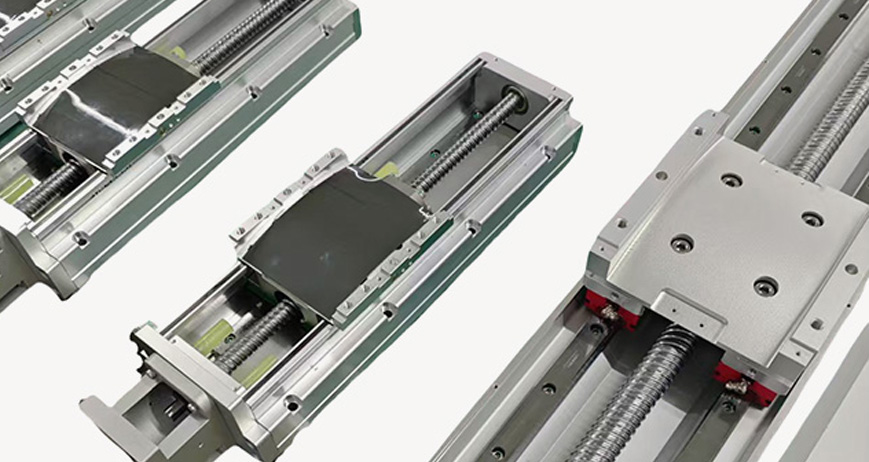
Robotics is playing an increasingly essential part in modern production as science and technology develop and industrial automation becomes more widely used. Among the many varieties of robots, single-axis robots like the Single-Axis Robot CS series have gained popularity among many businesses due to their distinct benefits and diverse application scenarios. In this essay, we will look at the key benefits of single-axis robots and their applications in a variety of sectors.
Advantages of Single-Axis Robots
Simple and effective design: Single-axis robots have a basic construction that typically includes a linear motion mechanism and a control system. The robot’s simple design allows it to easily execute linear movement duties, decreasing complexity and maintenance costs.
Single-axis robots have incredibly high positioning precision and movement speed when carrying out tasks. Because of its single line of motion, the control system may concentrate on improving motion performance, resulting in very precise repeating placement.
Simple to integrate and expand: Single-axis robots may be simply incorporated into existing manufacturing lines and work alongside other machinery. Furthermore, by merging numerous single-axis robots, more sophisticated multi-axis motions may be achieved, allowing the flexibility to adapt to changing production demands.
Space-conservative: Because of their small form, single-axis robots take up less room and are perfect for use in space-constrained industrial areas.
Scenario for single-axis robots
Electronics Manufacturing: Single-axis robots are frequently used to precisely identify and move tiny components during electronic component manufacture and assembly. Single-axis robots, for example, may efficiently perform component placement and soldering duties during printed circuit board (PCB) construction.
Packaging and Handling: Single-axis robots are frequently utilised for a range of packaging and handling applications. For example, in the food and beverage sector, single-axis robots may be used to sort, box, and palletise items, increasing the automation level of manufacturing lines.
Laser Processing: In laser cutting, welding, and marking operations, single-axis robots can precisely control the location and movement path of the laser head to provide high-quality processing results.
Automated warehousing: In automated warehousing systems, single-axis robots can be utilised for quick pick-and-place and handling of commodities, increasing warehouse operating efficiency.
Conclusion
Single-axis robots like the Single-Axis Robot CS series have become an essential tool in modern industrial automation. It is extensively utilised in many domains, including electronics production, packaging and handling, laser processing, automated warehousing, and medical equipment, and it provides a solid assurance for productivity and product quality across industries.
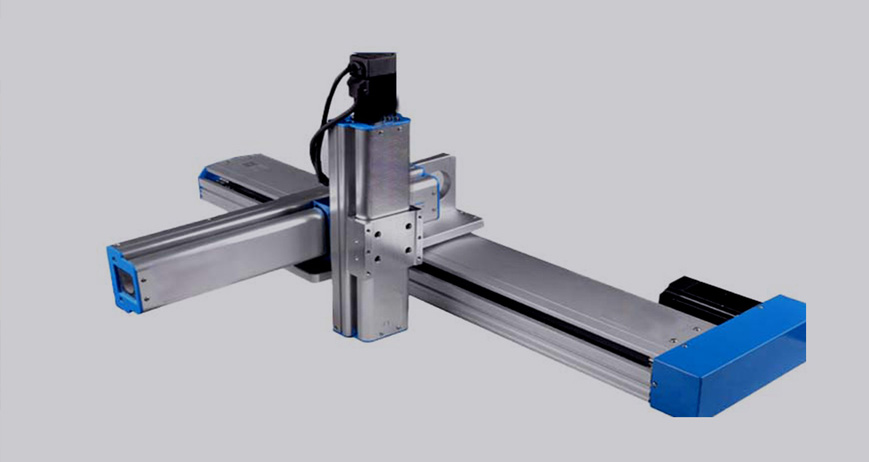
Linear motion accessories include both single- and multi-axis robots. As industrial automation advances, single-axis and Multi-Axis Robots applications become more common.
Single Axis Robot
There are several names for single-axis robot series items. Many users refer to single-axis robots as linear modules, electric slides, or similar terms. A single-axis robot is a mechanical moving part that can perform linear motion but is not confined to it. In practical applications, various unusual combinations can be employed to allow single-axis robots to do more complicated tasks. However, based on the current circumstances, the most advantageous aspect of single-axis robots is their modular and standardised operating capabilities, and their development has also reached a mature stage.
Multi-Axis Robot
Multi-axis robots appear to have a more complicated construction, using more than two axes. Multi-axis robots are not restricted to linear motion. They can do sophisticated tasks like grasping and handling by programming the machine ahead of time. Of course, the range of multi-axis robots capable of performing these complicated movements is restricted by the mounting base, which restricts the spatial range of the robot’s movement.
Despite installation limits, multi-axis robots have substantially greater flexibility of movement than single-axis robots. Almost all unique angle and trajectory operations may be performed within a multi-axis robot’s motion space using programming. A single-axis robot has a somewhat limited range of motion. However, when a single-axis robot is employed alone, it can often only perform grasping operations on predetermined paths for work pieces in fixed places.
The Difference Between Single and Multi-Axis Robots
The mechanical construction of the single-axis robot is rather basic. Its primary body is often made of aluminium profile materials, with linear guides, screw rods, and other gearbox components inserted within. This structure also limits the single-axis robot’s ability to perform simple point-to-point linear motion in its unassembled condition. Multi-axis robots are capable of collecting objects from several angles and paths.
Because single-axis robots have minimal component architectures, their detection and maintenance techniques are straightforward. They merely need to be greased with oil on a regular basis. However, the internal construction of a multi-axis robot is rather complicated. As a result, after a period of usage, the multi-axis robot’s overall working performance must be thoroughly examined, and any problematic parts must be changed in a timely manner to prevent interfering with the multi-axis robot’s regular operations.
The single-axis robot has a linear form and operates using basic methods and procedures. Furthermore, single-axis robots are less expensive and more efficient than Multi-Axis Robots.